Arshia Kashyap:
We live in times of great apprehension and restrictions- the current right-wing regime in India has consistently made a case for vegetarianism, with party members having called for a meat ban during the Hindu festival of Navratri. Note that at the same time, Ramadan was also being celebrated, a festival where meat lies at the core of several significant dishes. Not only is this demand utterly unsecular, but it is not the prerogative of the rest of the country to have to cater to the sentiments of the few. With this background, it becomes even more crucial to understand the rich history of meat-eating in India.
Before lynchings for beef consumption became commonplace, citizens of the Indus Valley civilisation regularly consumed beef and wild boar. Influenced by the necessity of survival, they were far removed from the idea of dietary restrictions, especially since rivers often changed course and herders destroyed crops. Meat was offered to the Gods- a tradition that continues in parts of West Bengal.
Beef has become a matter of contention. Upper caste Hindus fervently argue against it, pushing for bans and for restaurants to stop selling it. However, beef is still consumed by lower caste Hindus, Muslims, and Christians. According to BBC 80 million Indians eat beef, or 1 in 13. States like Kerala have well-loved traditional dishes such as Beef Ularthiyathu.
Upper caste Brahmins in the South consumed meat as recently as the 16th century. In Maharashtra, fishermen are often Hindus, and Bengali Brahmins also consume seafood and fish. Northern upper caste families only began to quit meat in the 19th century. Kashmiri pandits are famous for Rogan Josh, a flavourful lamb dish. To say that meat has not been a part of India’s history is fundamentally untrue, and to say that it is impure is a disrespect to the abundant meat dishes that exist in this country, particularly because the sect that considers itself to be the most pure also partakes in this.
Even within meat eaters, we see a hierarchy. Those who consume poultry and white meat are at the top, followed by those who also eat pork, and then by those who eat beef. At the lowest rung, those who consume alternative meats follow. This includes silkworms, ants, and beetles, among others, especially in the North-Eastern regions of Nagaland and Meghalaya. Meanwhile, Assamese people have consumed insects during the festival of Bohag Bihu for generations. To dismiss their culture as ‘dirty’ or ‘vile’ is a disservice to the rich history that accompanies these food habits.
At the same time, vegetarianism has coexisted with eating meat. In fact, Indian elites adopted vegetarian diets before most other countries. We also see a trend of meat being permissible on certain days, where people restrict consumption on auspicious days of the week, such as Tuesdays or Thursdays (note that these days also differ across families). This is largely due to the association of vegetarian diets with purity. Undeniably, this notion is problematic; however, this goes to demonstrate that most Indians do not adopt purely vegetarian or non-vegetarian diets. Rather, our diets have been flexible and accommodated a variety of food groups throughout history. Thus, it becomes important for us to preserve diversity in our food habits, and not fall victim to ideologies that dictate what we eat by erasing the colorful history and evidence behind these practices.
हिंदी अनुवाद :
क्या भारत हमेशा से शाकाहारी रहा है? एक भूला हुआ इतिहास
आज के भारत में खान-पान सिर्फ स्वाद या ज़रूरत नहीं, बल्कि राजनीति और पहचान का मुद्दा बन चुका है। त्योहारों पर मांस खाने पर रोक, बीफ पर बहस, और “शुद्धता” के नाम पर थोपे जा रहे नियम—क्या ये सच में हमारी परंपरा का हिस्सा हैं?
इस लेख में अर्शिया कश्यप ने भारत में मांस खाने की प्राचीन और समृद्ध परंपरा पर रोशनी डाली है। सिंधु घाटी के लोग नियमित रूप से मांस खाते थे, ब्राह्मण समुदायों ने भी मछली और मटन को अपने भोजन में शामिल किया, और आज भी करोड़ों भारतीय बीफ से लेकर कीड़े-मकोड़ों तक अलग-अलग प्रकार के मांस खाते हैं।
भारत में शाकाहार और मांसाहार ने सदियों से साथ-साथ अस्तित्व में रहकर एक विविध और लचीली भोजन संस्कृति बनाई है। लेकिन आज कुछ विचारधाराएँ इस विविधता को मिटाने की कोशिश कर रही हैं, जो हमारे सांस्कृतिक इतिहास के साथ अन्याय है।
क्या हमें तय करना चाहिए कि कौन क्या खाए, या क्या हमें अपनी विविधता को स्वीकारना चाहिए?
इस लेख का मक़सद है – इस सवाल पर सोचने को मजबूर करना।
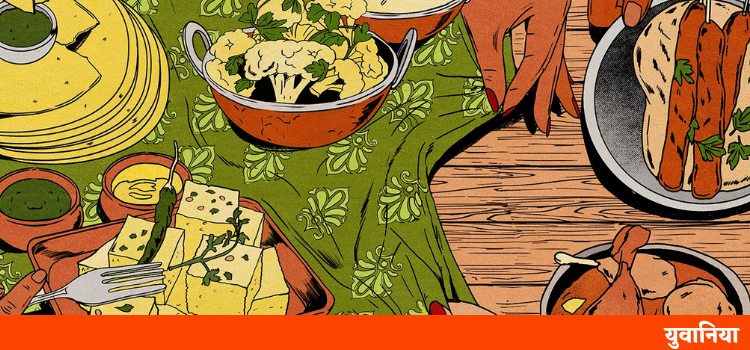
फीचर्ड फोटो आभार : फ़ॉरेन पॉलिसी.कॉम

Leave a Reply