By Juheb Jhony:
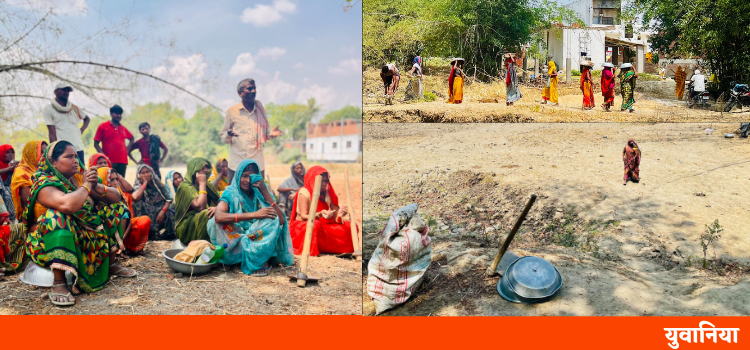
In Varanasi’s sun-scorched lanes and flood-ravaged villages and slums, climate change is not a distant threat—it’s a daily assault. For the city’s working poor—weavers, daily-wage labourers, sanitation workers, boatmen, and women who toil in homes and fields—the climate crisis is not just an environmental issue, it is a fight for survival. Despite contributing the least to global warming, they suffer its worst consequences.
Last year, Varanasi shattered heat records. The Banaras Hindu University observatory recorded 47.2°C, equaling a 140-year-old record from 1884. The airport station went further, logging 47.6°C in May—surpassing the previous May record of 46.8°C set in 1998. In nearby Prayagraj, the temperature touched 48.2°C, making it the second-highest in 30 years. For those in air-conditioned offices, these are numbers. For the poor, they are death sentences.
“In recent years, we’ve seen labourers fainting from heatstroke,” says Suresh Rathaur of the NREGA Mazdoor Union. “They work without shade, water, or rest. The heat is not just harsh—it’s lethal.”
In the tin-roofed house of Dagariya village’s Musahar basti, daily-wage worker Ram no longer risks working on the hottest days. “If I faint before I earn, what’s the point?” he asks, wiping sweat from his brow in a room that bakes like an oven.
For women, the heat carries a heavier price. “The high temperatures hit women hardest,” says Puja, a local labour activist. “They cook over firewood, fetch water, care for children—then go out to work. Their health is the first to suffer, but the last to be noticed.”
Climate extremes have also begun silencing dissent. “Organising protests or rallies is nearly impossible now,” says Renu, a senior NREGA Mazdoor Union leader. “Summers are too hot, monsoons too violent. People are unwell, irregular at work, and unable to travel.”
Raushan, a youth organiser, puts it bluntly: “Now it’s either drought or flood—there’s no middle ground anymore.”
What’s unfolding in Varanasi is not just a natural disaster—it’s a political failure. Government-backed mega-projects under the banner of “smart cities” and “heritage development” have bulldozed green cover and displaced the poor, all while ignoring their survival needs.
This isn’t neglect—it’s design. A development model that prioritises tourism and capital over communities has no space for the realities of heatstroke victims or flooded bastis.
As the mercury climbs, workers are forced to fight two enemies: a collapsing climate and a system that refuses to see them.
If Varanasi—and India—wants a future, it must ground climate action in justice. That means going beyond slogans, and listening to those who live closest to the crisis. Solutions must begin where the suffering is deepest:
- Recognise heatwaves and floods as labour rights issues and enforce mandatory protections.
- Provide climate-risk allowances, safe drinking water, rest shelters, and health services for daily-wage workers.
- Invest in green, climate-resilient infrastructure in working-class neighbourhoods.
- Ensure public healthcare and nutrition support, especially for women and children.
- Strengthen grassroots unions and community groups already building resilience from below.
Varanasi is more than a city of rituals and rivers. It is a city of working people—of women hauling water, of weavers working looms in stifling heat, of rickshaw pullers and boatmen navigating survival every day.
The climate crisis didn’t begin in the bastis—but perhaps, with enough courage, it could end there. Not through pity, but through solidarity, resistance, and a radical demand for justice.

Leave a Reply